Psoriasis is a skin disease that encourages skin cells to multiply faster than usual. This causes the generation of bulgy red patches on the skin. They can continue living everywhere on the skin. However, they are found commonly on the scalp, knees, lower back, and elbows.
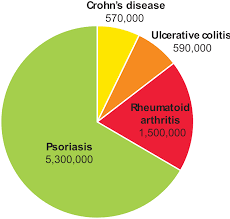
Adults are the most common prey of this ailment. The first-ever encounter of this ailment dates back to 1808. Moreover, it affects life adversely and requires long-term treatment. Furthermore, the treatment costs a lot and can break you down economically.
Types of psoriasis
Psoriasis exists in eight different types – plaque, guttate, pustular, psoriatic, nail, erythrodermic, scalp, and Flexural psoriasis. Let us have a look at each of them one by one:
Plaque psoriasis
This is the most widespread alternate of psoriasis. It affects an estimated 80% of people suffering from psoriasis. You can identify it through red patches with white scales on the skin.
Pustular psoriasis
It is a type of psoriasis with high severity. It has a tendency to spread on other parts of the skin at a fast pace. You can identify it through white pustules causing redness on the skin.
Guttate psoriasis
It is yet another common variety of psoriasis. It can be identified through small red dots on the skin. It affects around 10% of people suffering from psoriasis. It is found commonly in children.
Inverse psoriasis
This variant is found commonly on skinfolds (armpits, groin area, under the breasts). You can identify it through its shiny and smooth characteristics.
Erythrodermic psoriasis
It is a rare subcategory of psoriasis and is identical to severe burns on the skin. If you ever encounter this type of psoriasis then immediately get hospitalized.
Scalp psoriasis
As the name suggests, it appears on the scalp and causes itchiness, dandruff, and pain on the scalp. Moreover, it has a tendency to spread on the face, ears, and neck.
Nail psoriasis
Often confused with fungal infections, this category is more of a psoriasis manifesto. It can cause discoloring, pitting, and grooving of nails.
Psoriatic arthritis
This is so far the most painful category of psoriasis that affects 10-30% of people with this ailment. Moreover, there is no known cure for this variant of psoriasis.
Homeopathic management of psoriasis
The root cause of psoriasis is buried deep within the body. Hence, it doesn’t let itself express and cause other health issues. Therefore, homeopathy is ideal to treat such ailments because it believes in an inside out treatment.
Several homeopathic remedies address the core problems and work for its fixation. Moreover, along with the root cause, homeopathy also eradicates the external symptoms. That’s why even the best psoriasis doctors in Pune use homeopathy driven treatment.
Homeopathy not just provides the treatment from the surface, but strengthens the body from inside. Hence, it stimulates the immune system to yield out the ailments right from inside the body. Therefore, it proves to be the most effective treatment for psoriasis.
Bottom Line
It’s better to consult a doctor in case of skin-related concerns. Moreover, there are a lot of psoriasis subcategories. Therefore, consult an expert to find the one affecting you and get proper treatment for the same.
 Autoimmune Diseases Doctor